Irony is a fundamental concept in literature, allowing authors to convey complex meanings and emotions through subtle and often contradictory language. It’s a device that can add depth, humor, and surprise to a narrative, making it a crucial element for readers to understand and analyze. By recognizing irony, readers can uncover layers of meaning that might otherwise remain hidden, enriching their reading experience and fostering a deeper appreciation for the author’s craft.
The use of irony in literature is not new; it has been a staple of writers’ toolkits for centuries. From the ancient Greeks to modern authors, irony has been employed to critique societal norms, highlight the absurdity of situations, and create nuanced characters. However, identifying irony can be challenging, especially for younger readers or those new to literary analysis. This is where worksheets and practice exercises come into play, providing a structured approach to learning about irony and its various forms.
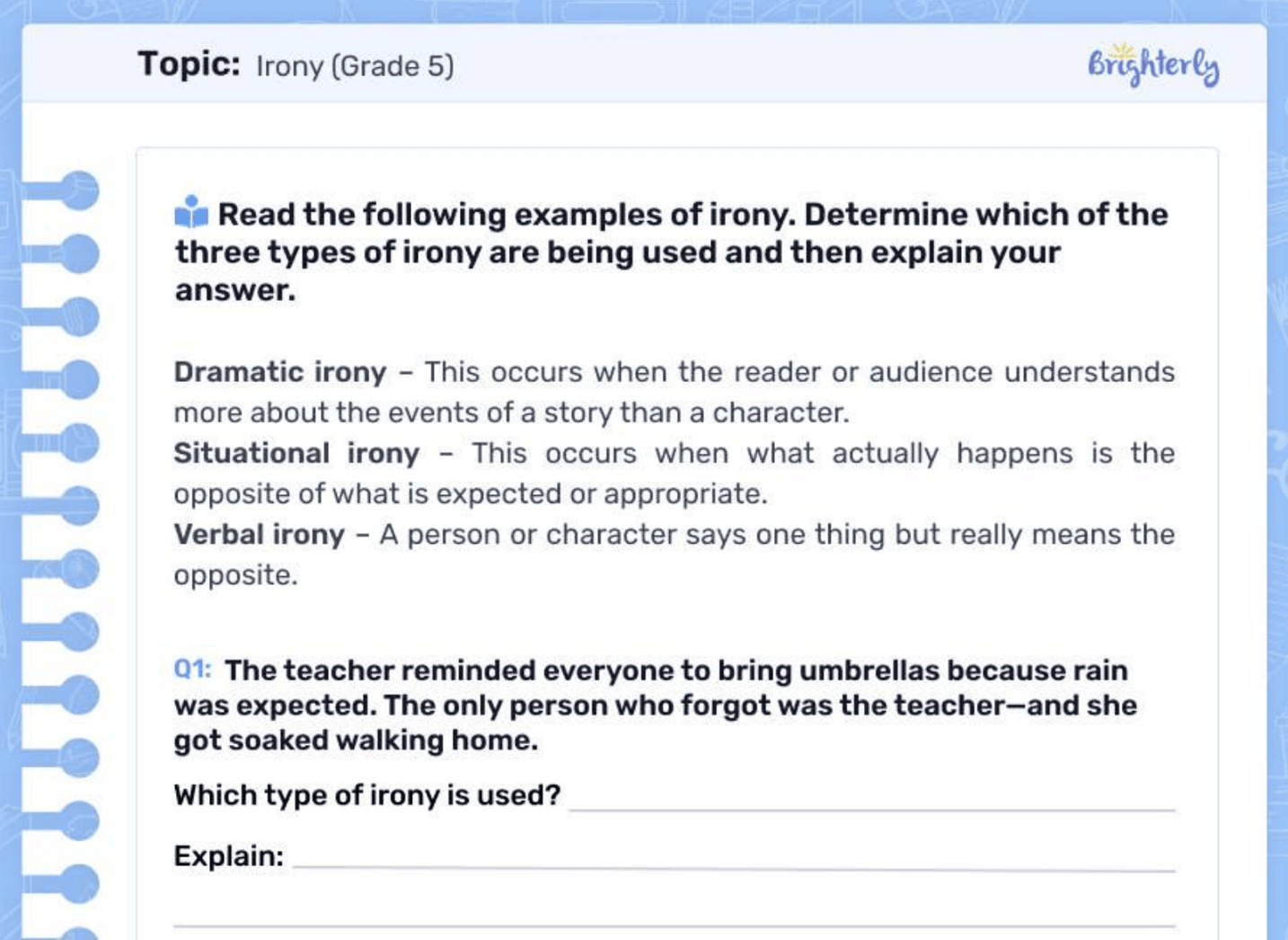
Irony Worksheet Free Printable
Understanding Irony in Literature
To truly grasp irony in literature, it’s essential to understand its basic forms. Irony can be verbal, situational, or dramatic. Verbal irony occurs when the words used convey a meaning that is opposite of their literal meaning. Situational irony happens when the opposite of what is expected to happen occurs. Dramatic irony is a situation in which the reader or audience knows something that the characters do not. Understanding these types is the first step in identifying and analyzing irony in texts.
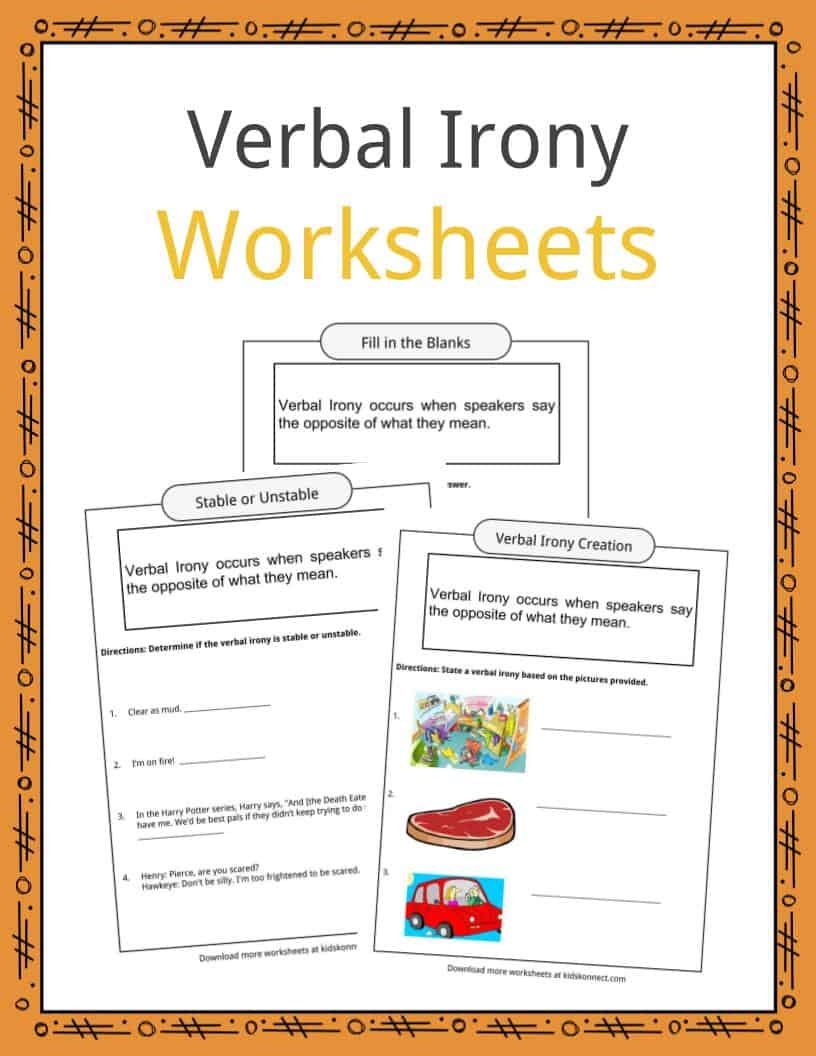
Verbal Irony Facts Worksheets Examples Definition For Kids
Types of Irony: Verbal, Situational, and Dramatic
Each type of irony serves a unique purpose in literature. Verbal irony can be used to highlight the complexity of a character’s thoughts or feelings, while situational irony can underscore the unpredictability of life. Dramatic irony, on the other hand, can create suspense or tension, as the reader is aware of impending events or secrets that the characters are not. By recognizing these types, readers can better interpret the author’s intentions and the themes of the work.
Practicing with Examples of Irony in Literature Worksheets
Practicing with worksheets that include examples of irony in literature is an effective way to hone your skills in identifying and analyzing irony. These worksheets can provide a range of texts, from short passages to full stories, each containing examples of verbal, situational, and dramatic irony. By working through these examples, either in a classroom setting or independently, readers can develop their critical thinking skills and improve their ability to recognize irony in all its forms. Moreover, printable worksheets offer the convenience of being accessible anywhere, allowing for flexible learning and practice.
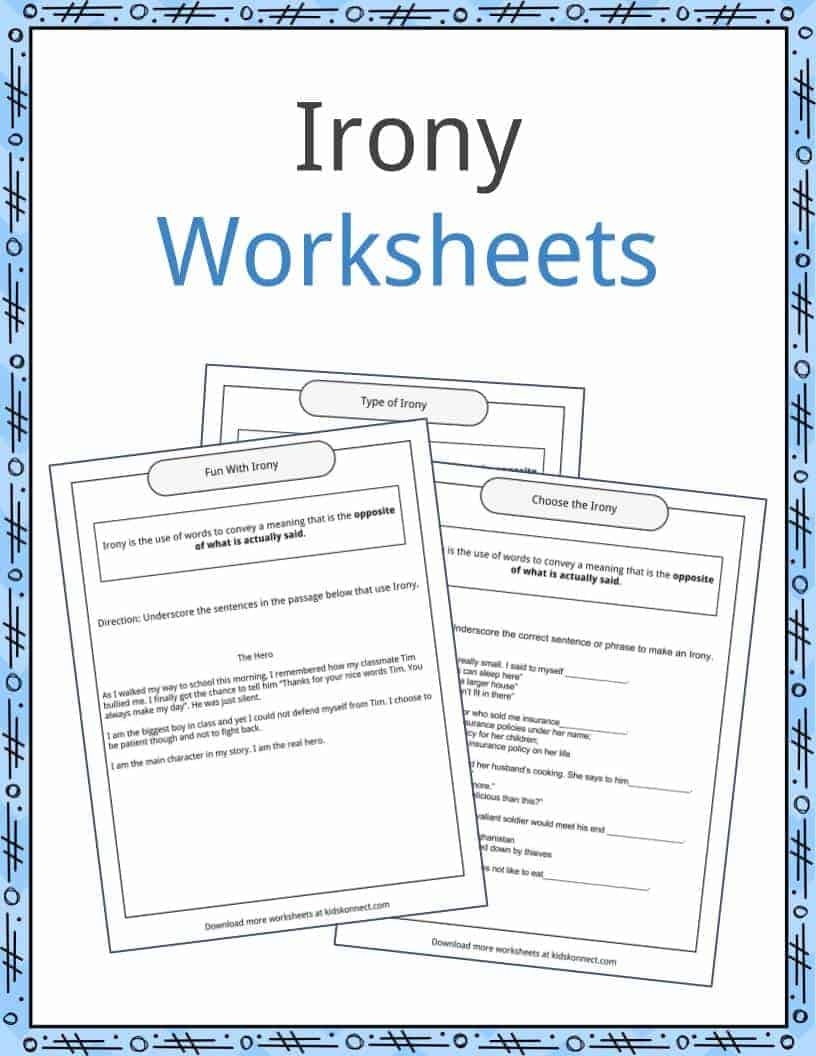
Irony Examples Definition And Worksheets KidsKonnect
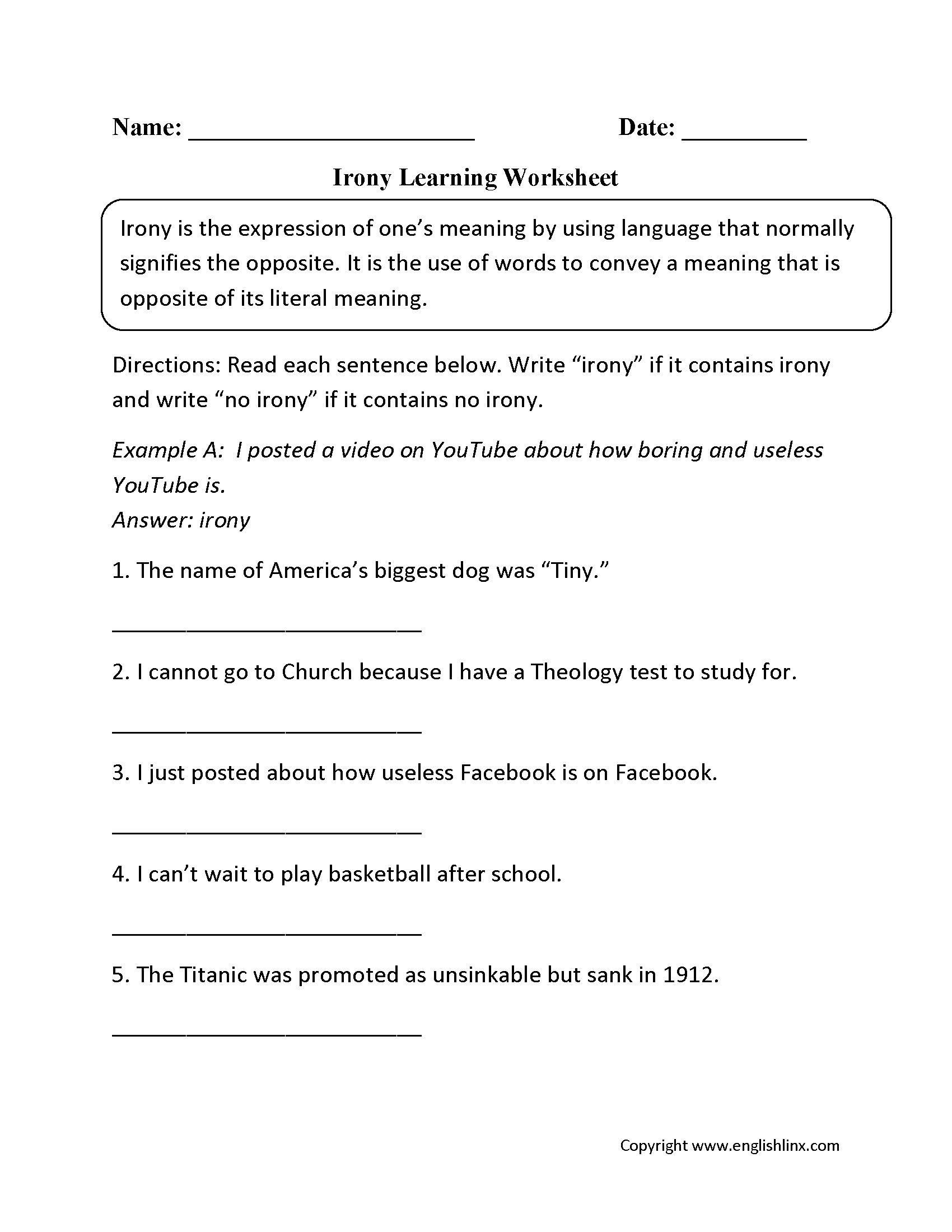
Figurative Language Worksheets Irony Worksheets
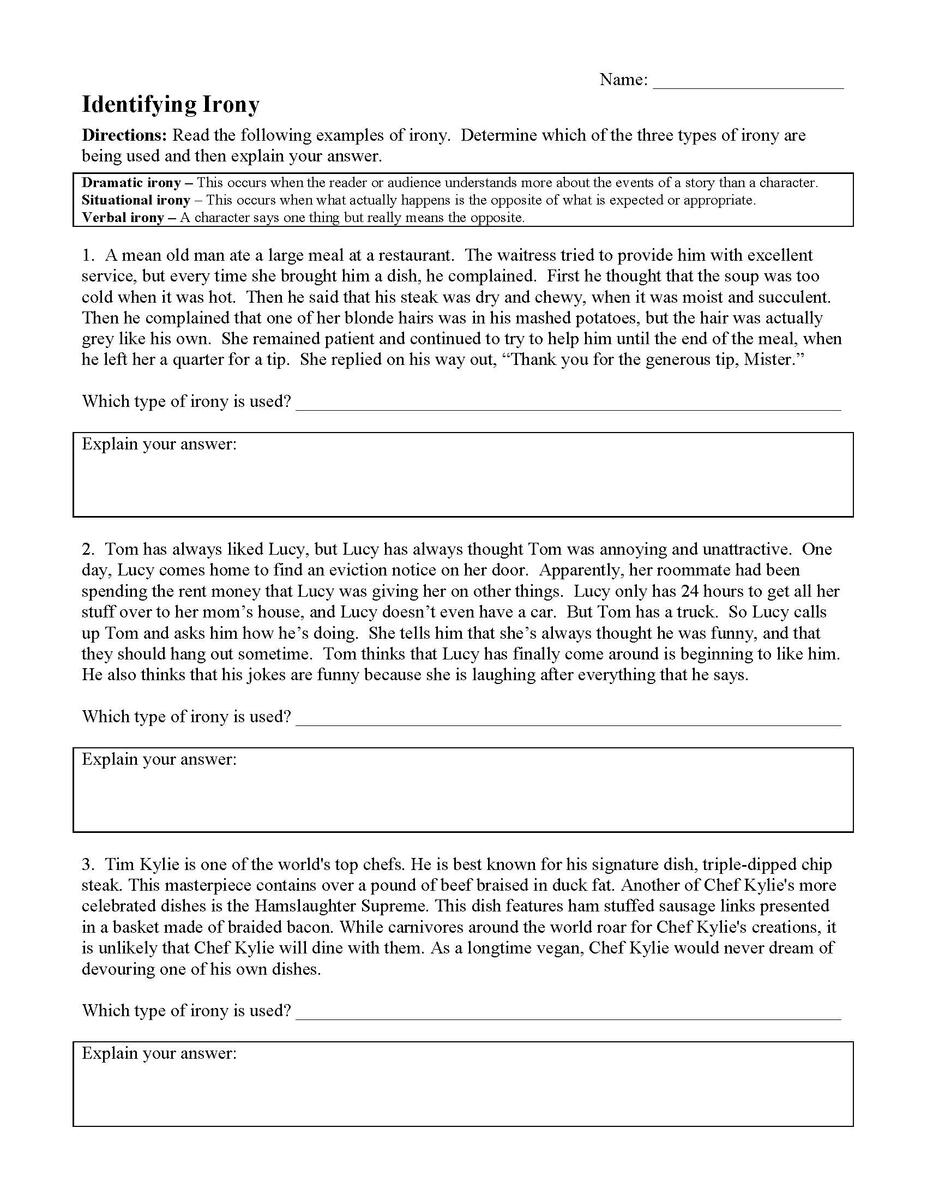
Irony Worksheet 1 Reading Activity