Possessive nouns are an essential part of the English language, used to show ownership or possession of something. They can be singular or plural, and regular or irregular, making them sometimes confusing for learners. Mastering possessive nouns is crucial for effective communication in English, whether in writing or speaking. It helps in conveying precise meanings and avoids ambiguity in sentences.
The rules for forming possessive nouns can vary, especially when it comes to singular and plural forms. Generally, for singular nouns, you add ‘s to form the possessive. For plural nouns that end in ‘s, you add just an apostrophe. However, nouns that are plural but do not end in ‘s require ‘s to be added. Understanding these rules and practicing them is key to becoming proficient in using possessive nouns correctly.
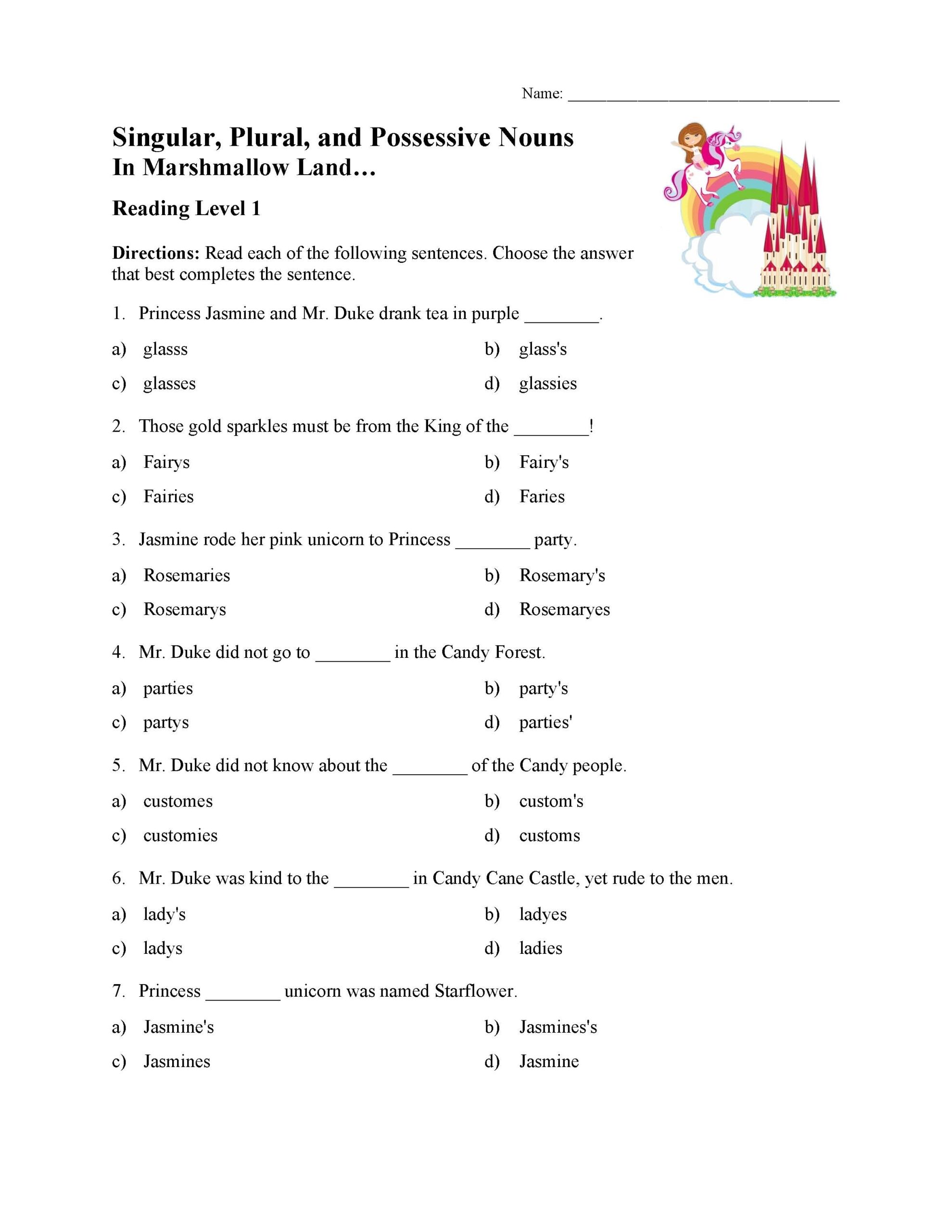
Singular Plural And Possessive Nouns Test 1 Reading Level 1 Preview
Understanding Possessive Nouns
To grasp the concept of possessive nouns fully, it’s vital to understand what they represent. Possessive nouns indicate that something belongs to someone or something. They can be used in various contexts, from simple sentences like ‘The cat’s toy’ to more complex expressions. The concept applies to both singular and plural nouns, with the formation rule changing based on whether the noun is singular or plural and how it ends.
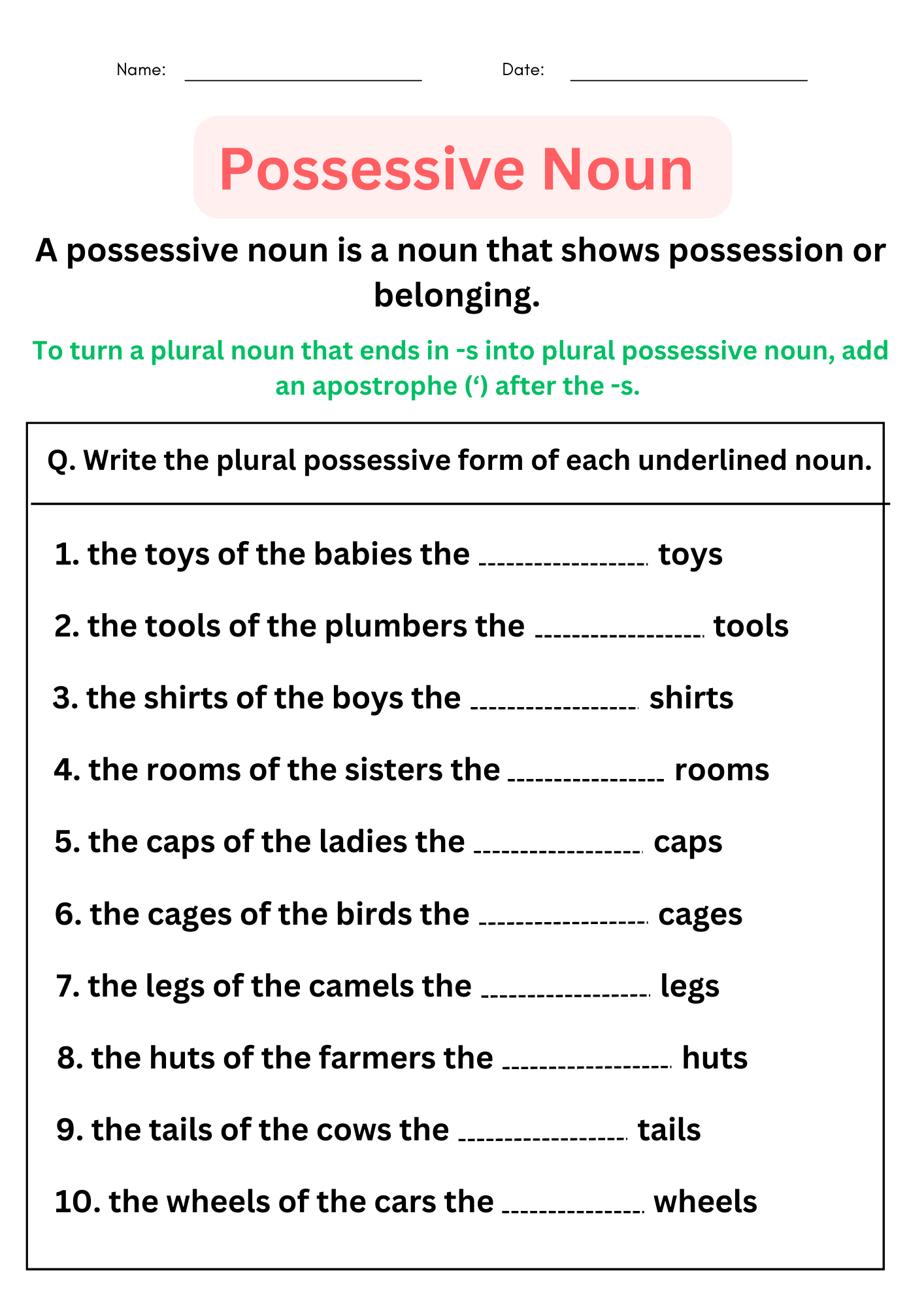
Possessive Nouns Worksheets With Answers Digital And Printable For Grade 4 5 Made By Teachers
Types of Possessive Nouns: Singular and Plural
Singular and plural possessive nouns have distinct formation rules. Singular nouns typically form their possessive by adding ‘s. For example, ‘cat’ becomes ‘cat’s. Plural nouns that end in ‘s form their possessive by adding just an apostrophe, so ‘cats’ becomes ‘cats’. However, plural nouns not ending in ‘s, like ‘children’, form their possessive by adding ‘s, resulting in ‘children’s’. Understanding these differences is crucial for accurate usage.
Practicing with a Printable Worksheet
Practicing with a printable worksheet is one of the most effective ways to learn and reinforce the rules of possessive nouns. These worksheets can provide a variety of exercises, from filling in the blanks with the correct form of the possessive noun to identifying whether a noun is being used correctly in a sentence. They can be particularly helpful for students or individuals looking to improve their English grammar skills. The worksheets are also a great tool for teachers and educators, offering a structured approach to teaching possessive nouns.
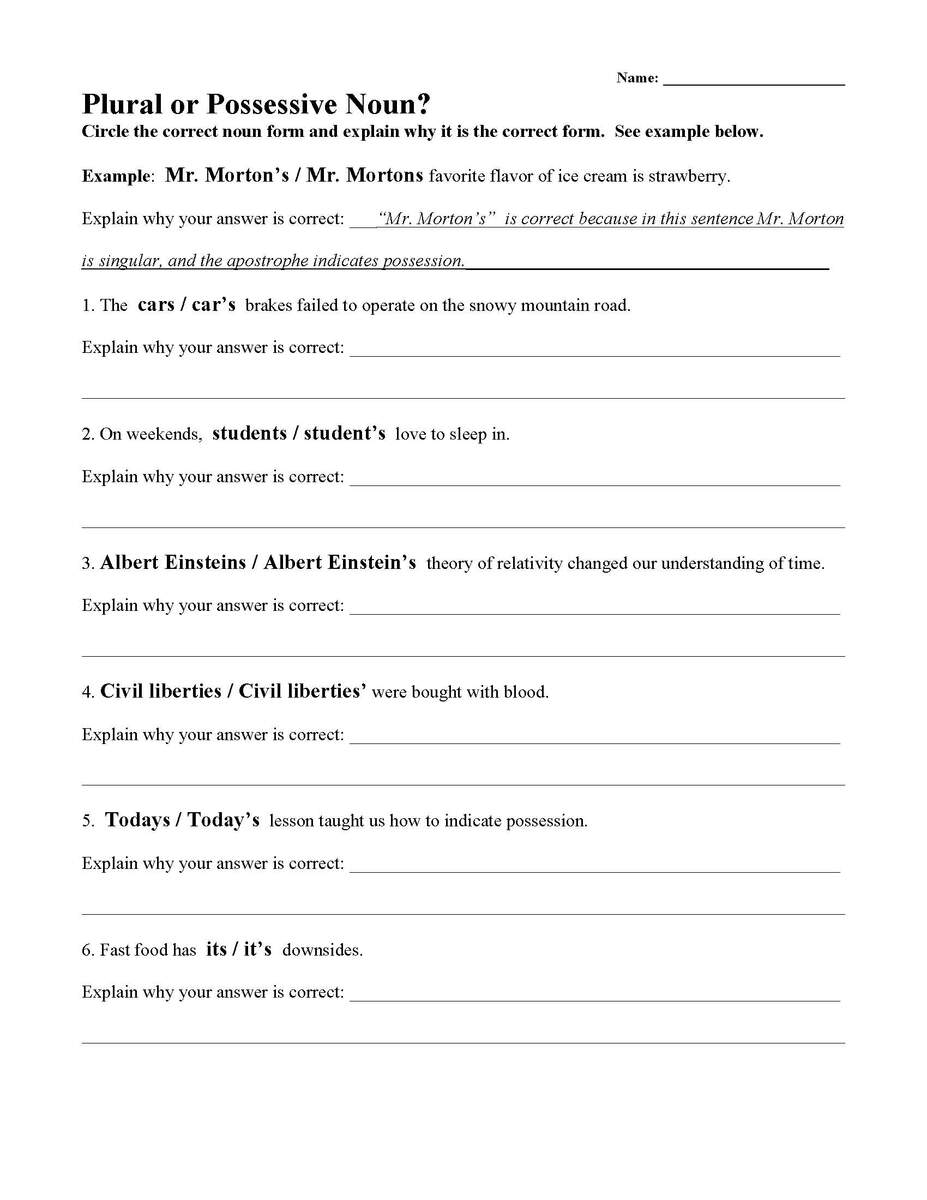
Plural Or Possessive Noun Worksheet Parts Of Speech Activity
Using a printable worksheet for regular, singular, and plural possessive nouns can make learning fun and engaging. It allows learners to work at their own pace, practicing as much as they need to feel confident with possessive nouns. The immediate feedback from completing exercises and seeing the correct answers helps reinforce learning. Moreover, the versatility of printable worksheets means they can be used in different settings, from classrooms to home study sessions, making them a valuable resource for anyone aiming to master English grammar.
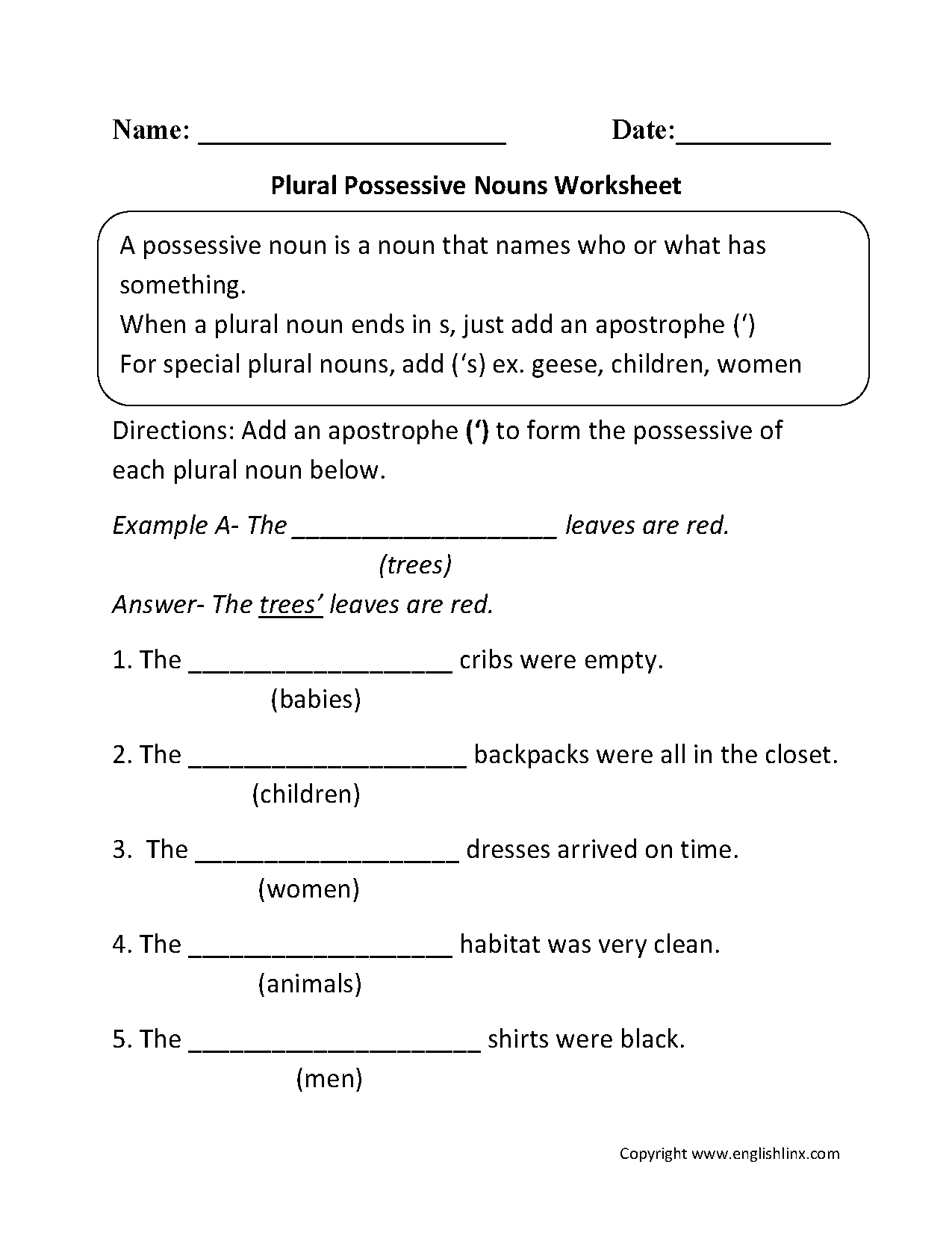
Possessive Nouns Worksheets Plural Possessive Nouns Worksheets
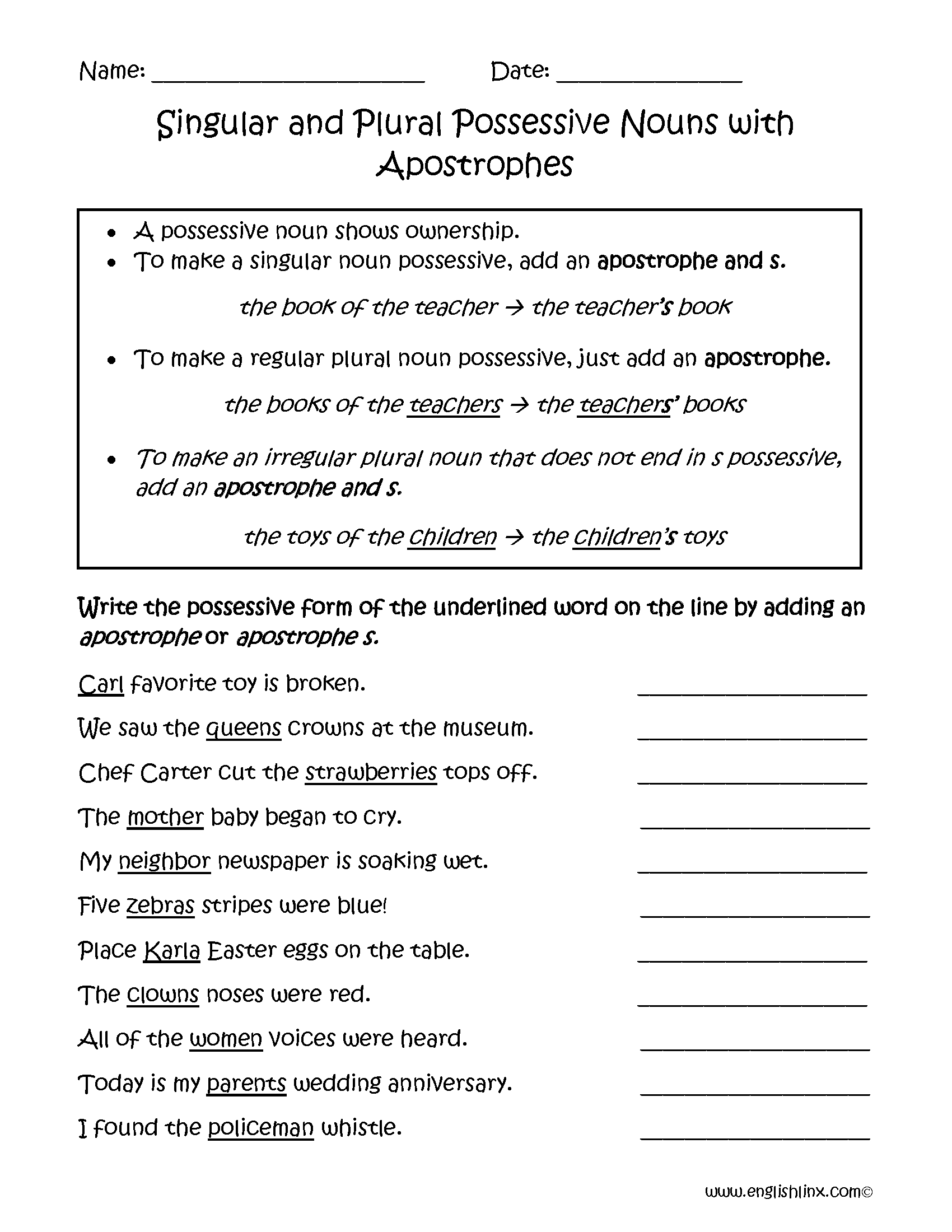
Possessive Nouns Worksheets Singular And Plural Possessive Nouns With Apostrophes Worksheets