Learning is an adventure that should be filled with fun and engagement, especially for children. One of the fascinating aspects of language that can make learning exciting is the use of onomatopoeia, alliteration, and rhyme. Onomatopoeia refers to words that phonetically imitate, resemble or suggest the sound that they describe, such as buzz, meow, or splash. Alliteration involves the repetition of initial consonant sounds in words that are close together, like snake and snakebite. Rhyme, on the other hand, is the repetition of similar sounds in two or more words, usually at the end of a line in poetry or music. These linguistic devices not only make language more interesting but also play a significant role in enhancing vocabulary, phonological awareness, and creative writing skills.
The integration of onomatopoeia, alliteration, and rhyme into educational activities can significantly enhance the learning experience. By using these devices, educators can create engaging lessons that capture students’ attention and encourage participation. For instance, reading poems or stories that are rich in onomatopoeia can help students develop their phonological awareness, which is crucial for reading and spelling skills. Similarly, exercises that involve creating alliterative phrases or rhyming couplets can foster creativity and improve linguistic skills. The key to making these learning experiences effective is to ensure they are interactive and enjoyable, which is where printable worksheets come into play.
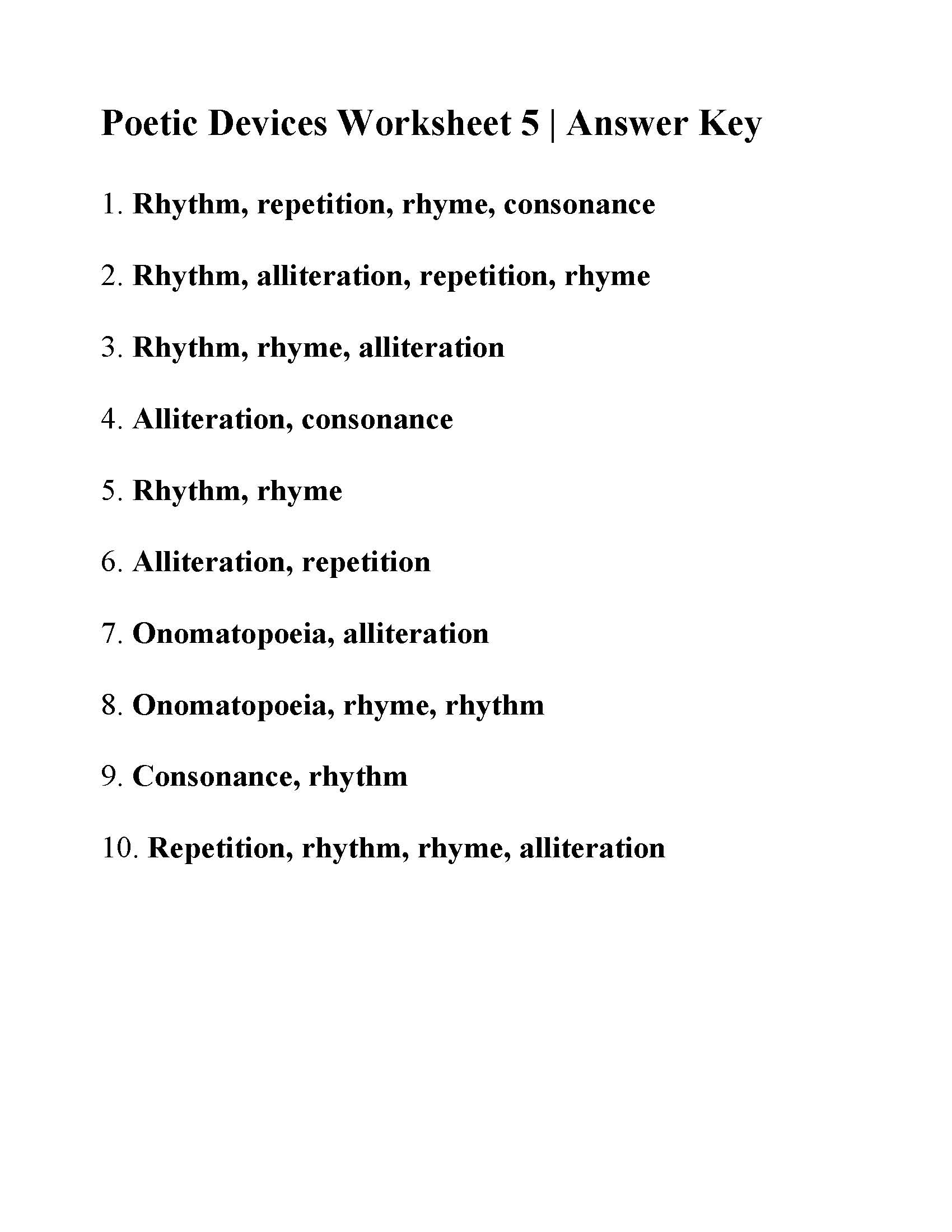
Poetic Devices Worksheet 5 Reading Activity
What is Onomatopoeia and Its Importance
Onomatopoeia is a fundamental element of language that mimics the sounds of the real world, making it easier for children to connect words with their meanings. The importance of onomatopoeia lies in its ability to create vivid imagery and to engage learners in a multisensory experience. When children learn through onomatopoeia, they are not just learning new words; they are also developing their auditory skills and imagination. This can be particularly beneficial in early childhood education, where sensory experiences are crucial for cognitive development. By incorporating onomatopoeia into learning activities, educators can make lessons more memorable and fun, thereby enhancing the learning process.
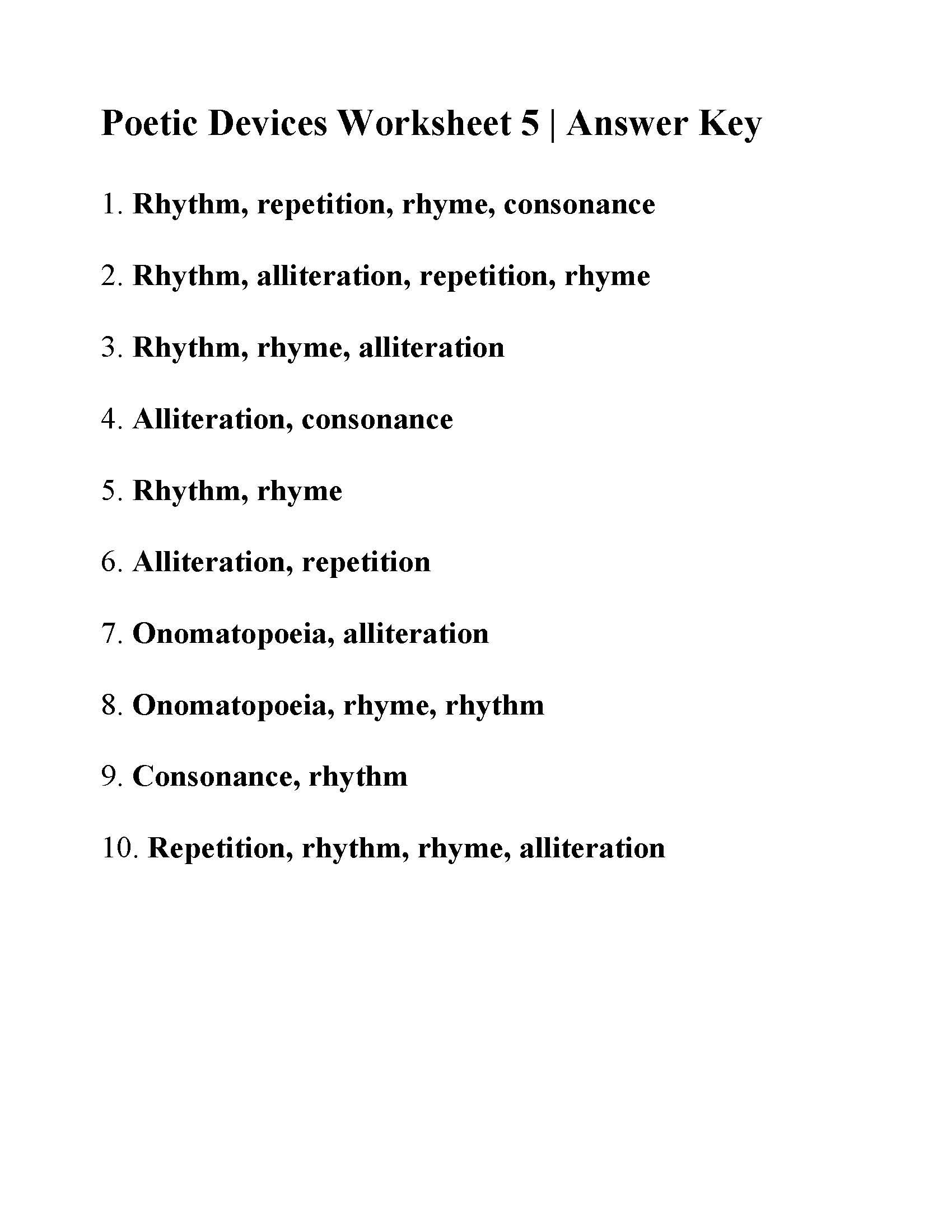
Poetic Devices Worksheet 5 Reading Activity
Benefits of Using Alliteration and Rhyme in Learning
The use of alliteration and rhyme in educational settings offers numerous benefits. Alliteration helps in improving memory and recall, as the repetition of sounds makes phrases more memorable. Rhyme, on the other hand, aids in developing phonological awareness, which is essential for reading and writing skills. Moreover, activities that involve creating rhymes or alliterative phrases encourage creativity and linguistic experimentation, which are vital skills for effective communication. By leveraging these devices, educators can create a supportive learning environment that fosters engagement, creativity, and academic achievement. Printable worksheets that focus on alliteration and rhyme can provide a structured yet fun way to practice these skills.
How to Use Printable Worksheets for Effective Learning
Printable worksheets are an invaluable resource for educators looking to incorporate onomatopoeia, alliteration, and rhyme into their teaching practices. These worksheets can be tailored to meet the specific needs of different age groups and learning levels, making them versatile tools for education. They can include a variety of activities, such as matching games, fill-in-the-blank exercises, and creative writing prompts, all designed to engage students with onomatopoeia, alliteration, and rhyme in an interactive way. The advantage of printable worksheets is their accessibility and ease of use; they can be printed out as needed and used in classrooms, homeschooling settings, or even as homework assignments. By utilizing these worksheets, educators can ensure that their students have a fun and educational experience while learning about these important linguistic concepts.
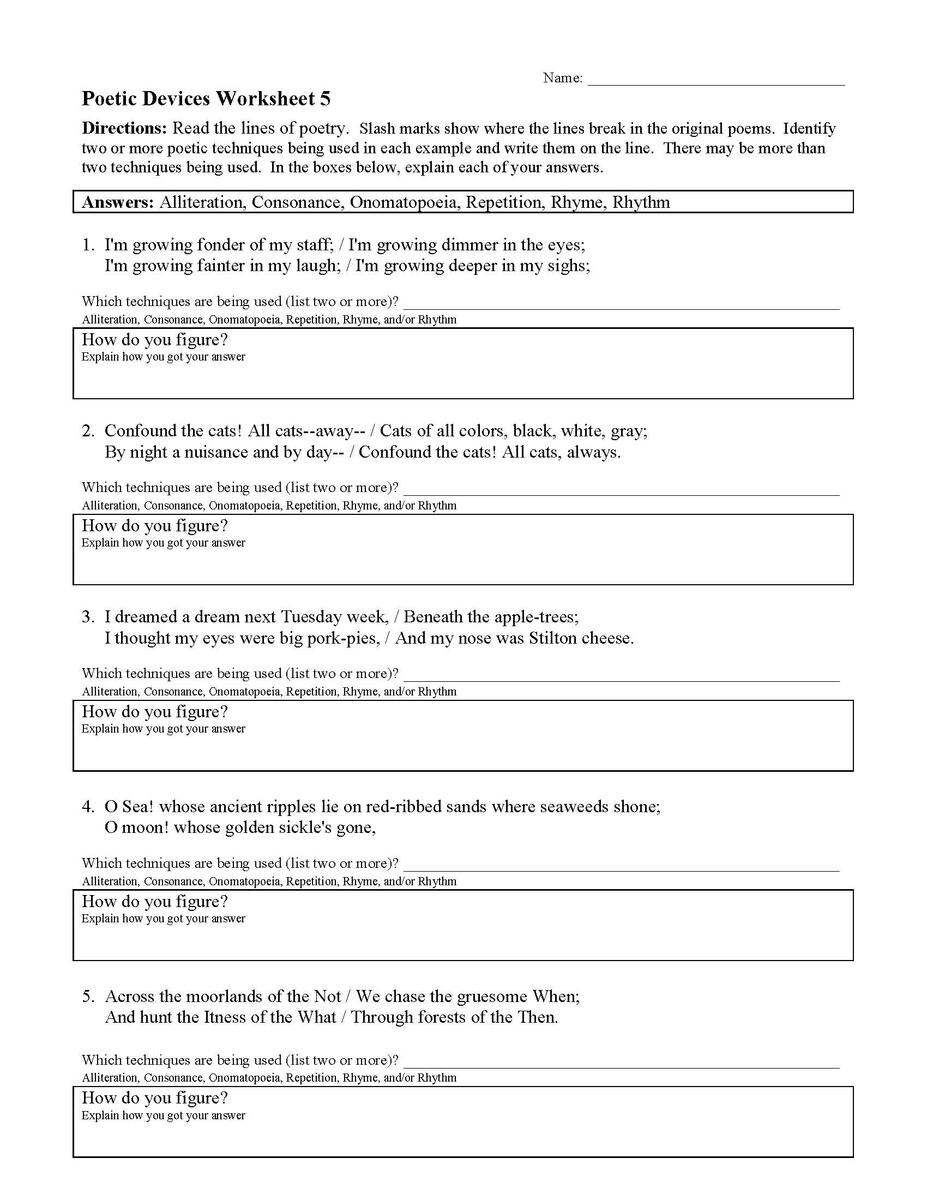
Poetic Devices Worksheet 5 Reading Activity
In conclusion, printable onomatopoeia alliteration and rhyme worksheets are a valuable educational tool. They offer a fun and engaging way to learn about language, enhancing phonological awareness, creativity, and linguistic skills. By incorporating these worksheets into educational activities, educators can create a learning environment that is both enjoyable and effective. As technology continues to evolve, the availability and variety of these worksheets are likely to increase, providing educators with even more resources to teach onomatopoeia, alliteration, and rhyme in an engaging and interactive manner. Whether used in a traditional classroom setting or in homeschooling, these worksheets have the potential to make learning a delightful experience for students of all ages.
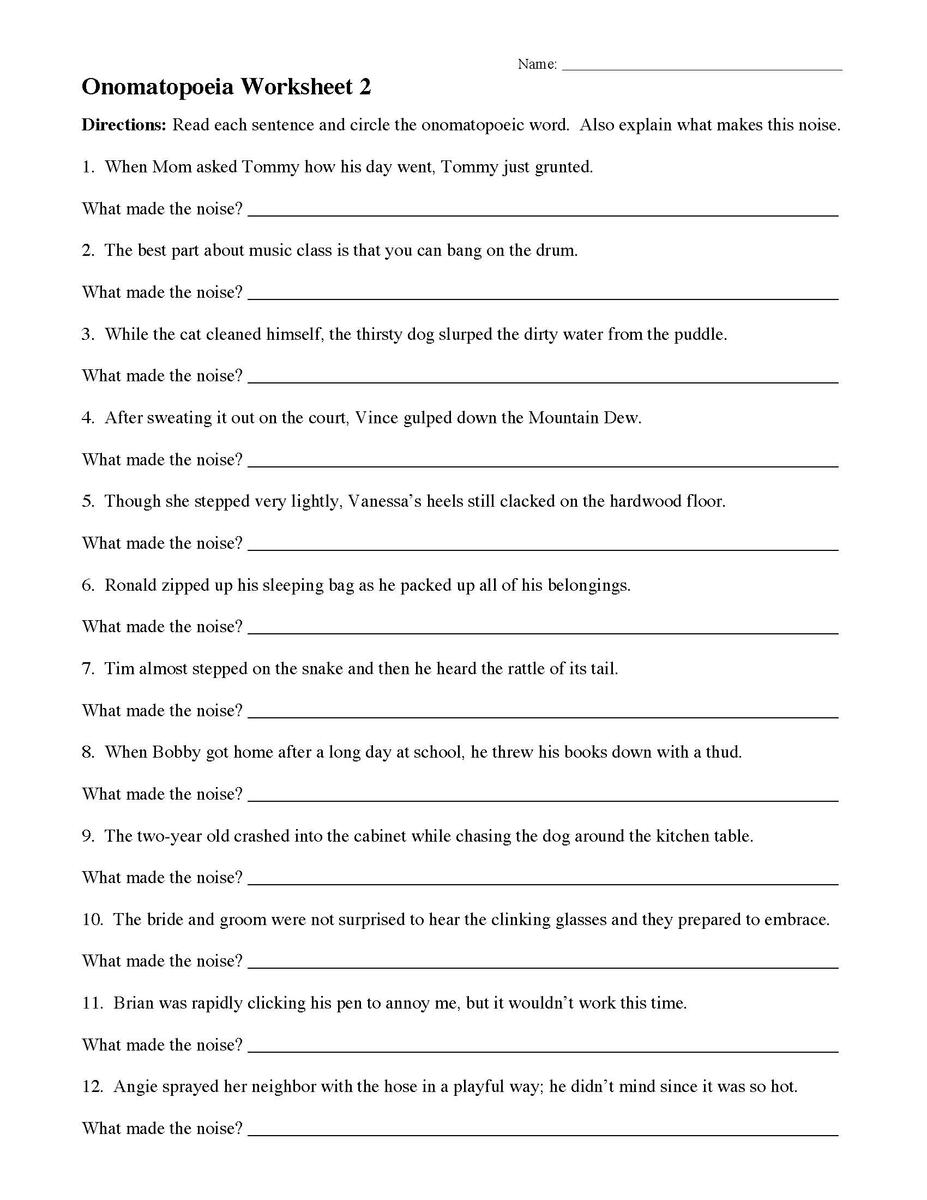
Onomatopoeia Worksheet 2 Poetic Devices Activity
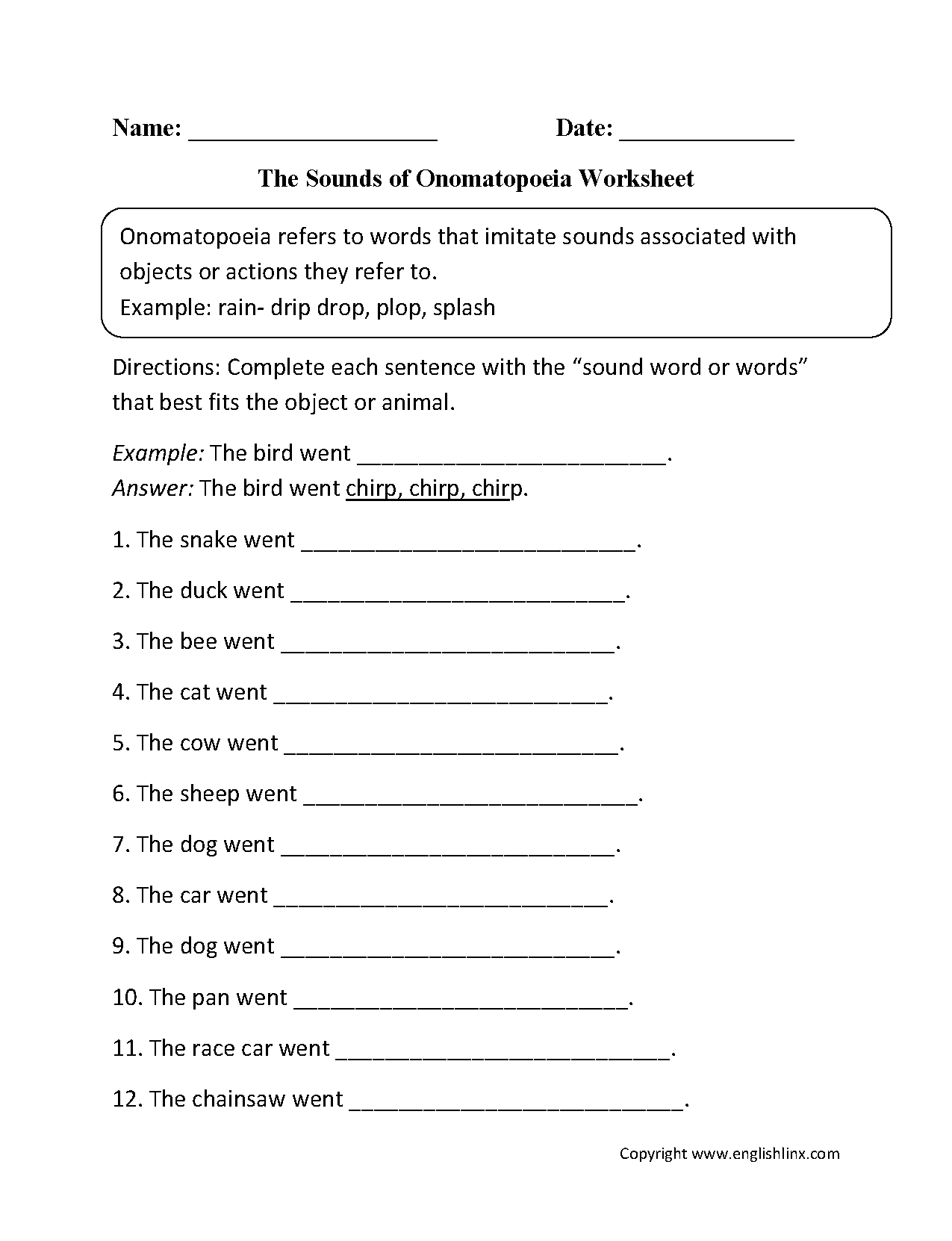
Englishlinx Onomatopoeia Worksheets